





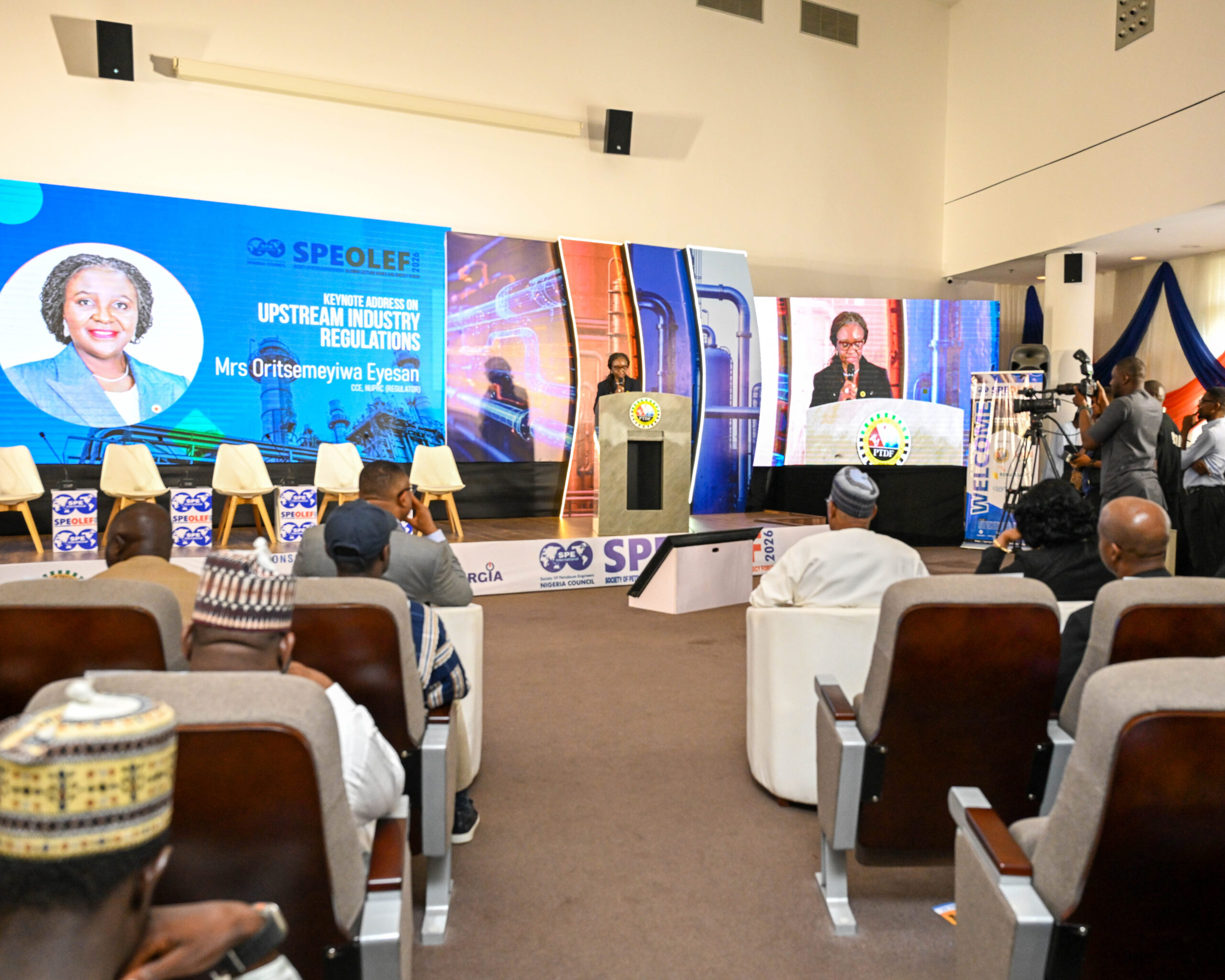





Upstream industry regulation and how the post–PIA policy and regulatory framework can reshape Nigeria’s upstream landscape
- Distinguished leaders of the Society of Petroleum Engineers, captains of industry, esteemed colleagues, partners, and stakeholders, ladies and gentlemen, good morning.
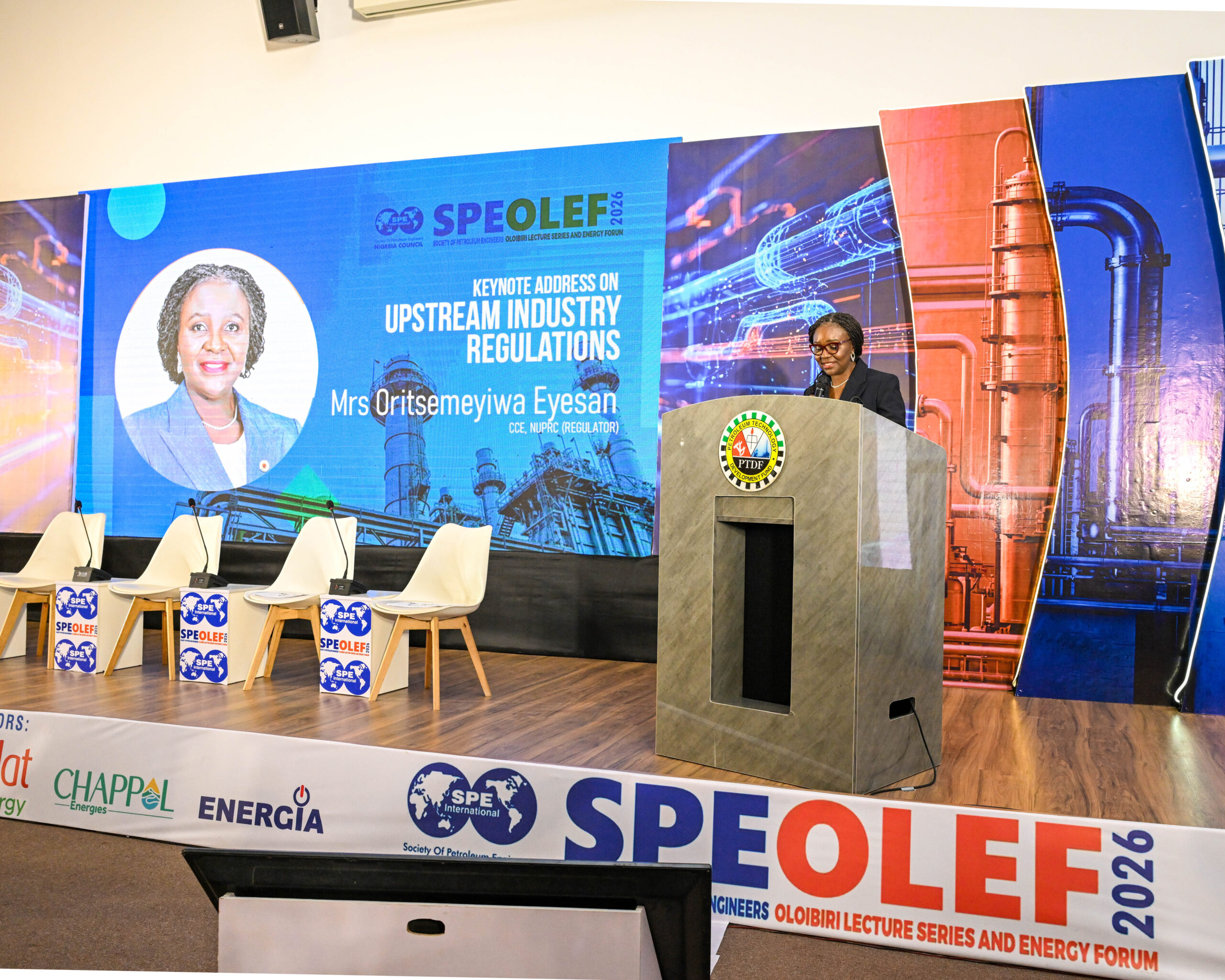
- It is a true honor to address you at the 26th Oloibiri Lecture Series and Energy Forum. I commend the SPE Nigeria Council for sustaining this critical platform, which has elevated the discourse and thought leadership in Nigeria’s energy industry, driving real change and innovation.
- Oloibiri is more than a place on the map or a chapter in our geological record—it marks the moment Nigeria entered the global energy stage in 1956. That discovery ignited a journey that shaped our economy, propelled national development, and defined our identity as an energy nation. Today, as we look back to Oloibiri, we must also recognize the responsibility to innovate and lead as we chart the next chapter of Nigeria’s energy story.
- Our history established our presence, but our future depends on the choices we make today. The next chapter is not simply about what lies beneath the ground, but about our capacity to adapt, innovate, and execute with discipline. This responsibility rests firmly with us—industry, government, and stakeholders alike.
- Nigeria is richly endowed with over 37 billion barrels of crude oil and more than 200 trillion cubic feet of natural gas, spanning deepwater, shallow water, onshore, and frontier basins. Yet, for years, this abundance did not translate into the performance expected. Investment slowed, projects stalled, costs escalated, and confidence eroded. The lesson is clear: resource endowment alone does not create value. Value is realized through effective execution, driven by alignment of policy, capital, and technology. The theme of this year’s forum is timely because it addresses exactly these issues.
- In keeping with this theme, my focus today is on upstream industry regulation and how the post–PIA policy and regulatory framework is reshaping Nigeria’s upstream landscape. Purposeful regulation is enabling digital oilfields, unlocking investment, improving recovery, and strengthening our national energy security.
- With oil and gas central to national development priorities, our production targets are ambitious: reaching 2 million barrels of oil per day and 10 billion standard cubic feet of gas by 2027, scaling up to 3 million barrels and 12 billion cubic feet by 2030. These milestones are steps toward building an efficient, resilient, and globally competitive sector. Achieving them requires more than drilling—it demands policy and regulatory frameworks that attract capital, spur innovation, enable digital oilfields, and ensure value is created intelligently and sustainably.
- The passage of the Petroleum Industry Act in 2021 marked a decisive reset. Supported by clear regulations, deliberate guidelines, and targeted Presidential Executive Orders, the legal, fiscal, governance, and regulatory framework established under the Act is actively reshaping Nigeria’s upstream sector. At its core is a new regulatory philosophy built on certainty, transparency, and performance. Let me illustrate this with concrete examples.
- This regulatory philosophy is being translated into action through clear, predictable rules, standardized data frameworks, streamlined approval processes, and sustained collaboration. The Commission has gazetted 19 regulations, with five (5) more advancing, covering critical upstream areas. Developed with operators, service providers, and investors, these regulations have replaced discretion with rules, ambiguity with clarity, and delays with defined timelines.
Let me highlight three recent case studies that exemplify how these reforms have enabled investment and delivered tangible results: Bonga North, Ubeta, and HI.
- Bonga North: The Bonga North project, a major deepwater development, moved forward after the regulatory reforms provided fiscal clarity and accelerated approvals. The predictable environment established by the PIA and targeted Executive Orders reduced investment risk, enabling partners to finalize a multi-billion-dollar Final Investment Decision. Lessons learned include the power of stable policy, clear timelines, and open stakeholder engagement in unlocking capital.
- Ubeta: Ubeta, a significant gas development, benefited from enhanced fiscal incentives for gas, streamlined licensing, and a transparent approval process. The reforms addressed long-standing bottlenecks, allowing the project to progress rapidly and contribute to Nigeria’s gas supply ambitions. The key takeaway is that aligning regulation with market needs creates opportunities for both investors and the nation.
- HI: The HI development, another major upstream investment, was enabled by the new asset stewardship framework and performance-based work programs. By requiring sound reservoir analysis and improved recovery techniques, the regulatory changes ensured the project would maximize value and deliver sustainable outcomes. This case highlights the importance of data-driven oversight and disciplined asset management.
Collectively, these projects represent over ten billion dollars in new upstream investment, demonstrating that clear policy, firm regulation, and deliberate leadership are essential to unlocking real value and cementing Nigeria’s position as a competitive upstream destination.
- As these examples show, digitalization is also reshaping our regulatory landscape. Digital technology underpins operational excellence and must be at the center of regulatory oversight. The Commission is advancing a digital-first environment where approvals, reporting, and compliance are managed through integrated platforms, delivering speed, transparency, accountability, and real-time visibility for operators.
- Beyond regulation, digitalization must transform the entire value chain. For operators, real-time data is a competitive necessity, enabling faster, evidence-based decisions, lower operating costs, safer operations, and more reliable outcomes. Through digital twins, real-time monitoring, predictive maintenance, and advanced analytics, operations are more precise, downtime is minimized, and asset value is consistently enhanced.
- In this evolving landscape, we must intentionally design our regulations to establish standards, ensure interoperability, and build confidence in data integrity. This is essential for fostering innovation and sustaining competitiveness.
- Capital today is selective; it flows to environments where risk is clearly defined, costs are competitive, and policies are stable. Through the PIA and targeted Executive Orders, Nigeria has created these conditions. Investor confidence has been strengthened by addressing structural challenges, shortening approval timelines, focusing local content on capability and value, and enhancing fiscal incentives for deepwater and gas developments. Our objective is clear: to build an investment climate defined by clarity, consistency, and confidence.
- Early indicators are promising. Investor confidence is returning, reflected in increased rig activity, a growing pipeline of approved Field Development Plans, and major Final Investment Decisions. These developments reaffirm Nigeria’s position as one of Africa’s most competitive upstream destinations and reinforce the truth that clear policy, firm regulation, and deliberate leadership are essential to unlocking real value.
- True prosperity and lasting value come when our resources are optimally developed, intelligently managed, and efficiently recovered. In an era of disciplined capital and heightened investor scrutiny, every barrel counts. Improving recovery factors is fundamental to strengthening profit margins and enhancing asset attractiveness.
- The Commission’s post–PIA framework anchors field approvals on sound reservoir analysis and economics, requiring operators to deploy improved recovery techniques. Our new performance-based work program and asset stewardship assessment framework ensure assets are actively developed, responsibly managed, and continuously optimized for improved recovery and lasting national benefit.
- Nigeria’s upstream sector is now seen not just as a revenue source, but as a strategic instrument for national energy security. Efficient, transparent, and resilient operations stabilize the economy and underpin Nigeria’s long-term energy future. Regulatory certainty and disciplined governance now provide the foundation for supply reliability, investor confidence, and system resilience.
- Our post–PIA policies and regulatory frameworks are structured to advance these energy security objectives. Domestic crude oil and gas supply obligations ensure national demand is met, insulating the economy from supply shocks. Gas flaring elimination frameworks unlock previously wasted molecules, convert liabilities into value, and expand gas availability for power generation and industry.
- Our new paradigm for licensing rounds and acreage management is designed to stimulate exploration and accelerate development, increasing production and strengthening domestic energy availability. Risk-based inspections, enhanced safety regulations, and Host Community Development Trust obligations collectively protect assets, safeguard lives, and secure the social license to operate. These measures ensure Nigeria’s energy resources are developed sustainably and responsibly, guaranteeing long-term national energy security.
Final Note
Ladies and gentlemen, as global energy dynamics continue to evolve, reforms in Nigeria’s oil and gas sector must extend beyond rules on paper. They must unlock investment, accelerate digital oilfield adoption, improve recovery, and strengthen energy security. Achieving this requires shared responsibility and collective action.
I would highlight the collective expectations from all stakeholders
- Participate in Consultations: Engage actively in regulatory consultations and policy development. Your input shapes frameworks that serve the industry and the nation.
- Embrace Digital Transformation: Adopt digital tools, real-time data platforms, and analytics to drive operational excellence and compliance.
- Prioritize Sustainability: Implement best practices in environmental stewardship, resource optimization, and community engagement. Support the drive to eliminate gas flaring and expand clean energy solutions.
- Collaborate for Innovation: Work together across industry and government to pilot new technologies, share data, and accelerate progress.
- Champion Transparency: Promote clear reporting, data integrity, and accountability at every stage of the value chain.
Let us honor the legacy of Oloibiri by shaping Nigeria’s upstream sector for the future—one driven by smart policies, efficient regulation, and enduring value.
As we reflect on the transformative journey from Oloibiri to today’s reforms, let us commit not only to preserving our heritage but to forging new paths of leadership and innovation. The Commission is committed to transparent regulation, efficient processes, and digitally enabled oversight. But true progress depends on the collective ownership of outcomes by all stakeholders. Together, let us build an energy sector that is efficient, resilient, and globally competitive—one that secures Nigeria’s future and delivers lasting value for generations to come.
Oritsemeyiwa Eyesan (Mrs.)
CCE, NUPRC